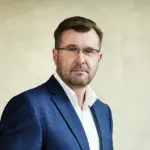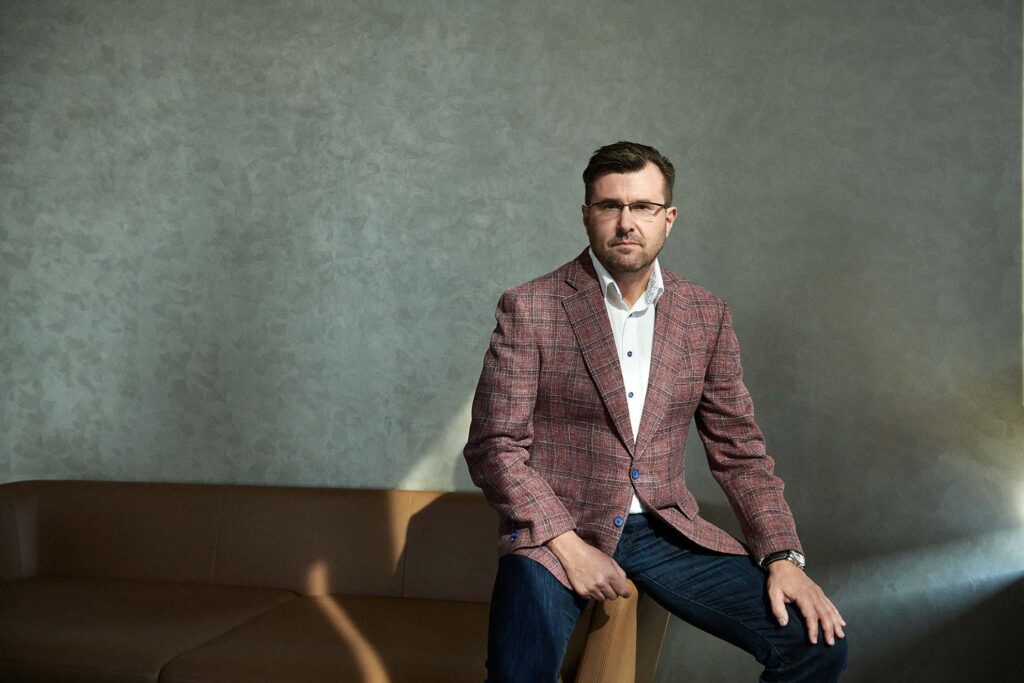
“Today, billionaires should not concentrate their family wealth in a single country,” says Jaroslav Havel, founder of the law firm HAVEL & PARTNERS, whose ONE FAMILY OFFICE manages the wealth of many Czech billionaires. The times call for diversifying assets in more than one direction, not only across sectors.
The most successful will be those who can continuously reallocate capital across sectors, geographies, and asset classes, depending on where the highest long-term risk-adjusted returns are being generated.
Despite recent challenges, domestic billionaires have continued to grow their wealth. In the billionaires’ ranking, it is primarily the wealthiest among them who are increasing their fortunes. Will this trend continue?
Yes, and the same pattern can be seen globally. In this respect, our region is no exception. In the Czech Republic, the number of people with assets exceeding CZK 1 billion continues to rise, as does the number of dollar billionaires. The wealth of those already at the very top is growing particularly rapidly. Many of the most successful entrepreneurs today no longer rely on a single company alone. They are building investment groups, investing in private equity, technology, energy, and foreign assets, and their wealth is far more diversified.
How do you view this development?
Today, Czech entrepreneurs are no longer entering foreign markets as investors from a smaller Central European economy. Instead, we see them participating in major transactions across Europe in sectors such as energy, infrastructure, industry, logistics, defence, and e-commerce. They are approaching deals as partners with capital, experience, and a clear strategy. They are not acquiring assets simply because they are cheap, but because those assets fit into the long-term development of their European business groups. This is no longer just about individual acquisitions, but about the systematic internationalisation of Czech capital, and not only through large cross-border transactions.
We can see this trend in the regions as well, among traditional family businesses exploring opportunities in foreign markets, as well as among mid-sized companies, industrial groups, and technology firms. These businesses are increasingly establishing subsidiaries in countries such as Germany and Poland, as well as beyond the European Union, including the Balkans and the United Arab Emirates.
How have alliances among the wealthiest changed in recent years? In the past, it was often said that the Strnad family did not typically enter into partnerships with the wealthiest Czechs. Today, however, it is publicly known that they co-own assets with groups such as PPF and J&T, and are also pursuing investments together with entrepreneur Pavel Tykač. Do you expect this trend to continue?
I believe that as the size of wealth grows, we are likely to see such partnerships becoming increasingly common. For certain opportunities, it simply makes more sense to combine the capital, experience, and expertise of multiple investors.
Do you think any of the billionaires are particularly well positioned for a breakthrough?
In my view, success is not determined by who has the most capital. What matters is who can allocate it most effectively. The most successful will be those who can continuously move capital across sectors, geographies, and asset classes depending on where the highest long-term risk-adjusted returns can be achieved. I believe this is where the greatest differences among Czech billionaires will emerge.
At the same time, this is pushing the Czech market into its next stage. Once you are investing across multiple countries and asset classes, while managing not only returns but also risk, liquidity, and intergenerational wealth transfer, it becomes a discipline in itself. That is why an increasing number of Czech billionaires are establishing their own family offices or turning to professional wealth management services.
Within family offices, wealth management is evolving from the search for individual investment opportunities toward the comprehensive management of family capital. The ability to place every investment decision within this broader context will become increasingly important.
You offer wealth management services through ONE FAMILY OFFICE. Are you seeing this trend reflected in growing demand for such services?
Absolutely. After two and a half years our network of families and partners working together continues to grow.
What does a typical portfolio look like?
Within family offices, wealth management is evolving from the search for individual investment opportunities toward the comprehensive management of family capital. And the ability to place every investment decision within this broader context will become increasingly important. We focus on building a high-yield, well-balanced, and exceptionally secure globally diversified portfolio of assets across all major world currencies, including the possibility of generating a regular income stream. At least, that is our objective.
More broadly, however, we invest across all asset classes. We have offices or representatives in Frankfurt, Dubai, London, Miami, Silicon Valley, and Toronto. As a result, we have access to some of the most attractive investment opportunities worldwide in the private equity space, including global assets that are typically inaccessible to ordinary investors from our region.
Who is membership in a family office suitable for?
Our members and affiliated members typically have total family wealth ranging from CZK 150 million to CZK 15 billion. They include representatives of entrepreneurial families, men and women of different ages, ranging from successful technology investors who sold their businesses at the age of 35 to individuals over 70. I am personally the largest investor, and upon request I transparently share with members and prospective members how my own wealth portfolio is managed, including both its successes and its failures. We are exceptionally transparent in this respect.
When talking about investments, real estate is a major topic today. What is your strategy?
We are currently expanding our real estate activities globally in a significant way. We do not want to be a local player confined to a single market. Instead, we take a global view, looking at opportunities in the United States, Europe, and Asia. To give a specific example, I would mention an investment in Canada. It involves a project in the province of Alberta, where 350 family homes are being developed across five locations in Calgary. In the past, we have also invested in residential projects in Dubai. We want to look for the best opportunities across markets. At the same time, we continue to consider projects here in our region as well.

In the context of geopolitical developments, you often speak about a “Plan B” as a responsible approach to wealth management that is prepared for any scenario. Can you explain what Plan B means in practice and how it differs from ordinary investment diversification?
Plan B is not about buying an apartment in Spain or opening a bank account abroad and considering the job done. It is a carefully considered, long-term diversification of family wealth and risk across multiple jurisdictions. In fact, it is a new phenomenon that we have been addressing this year for dozens of affluent Czech and Slovak clients. It is a natural consequence of how the lives of successful entrepreneurs have changed over the past twenty years.
In the past, their businesses, assets, and families were largely tied to the Czech Republic. Today, they invest across Europe, acquire foreign companies, their children may study in London or the United States, and part of the family often lives abroad. It is therefore only logical that they must now take an equally international approach to managing their wealth. And it’s also about risk. The principle is exactly the same as with investing: no investor would keep all of their money in a single stock. Likewise, it no longer makes sense to concentrate family wealth in just one country. This is not only about the possibility of a conflict. Tax changes, regulatory developments, and economic conditions in a family’s home jurisdiction must also be taken into account.
Do you personally have an alternative scenario in place?
Yes. And the other partners of ONE FAMILY OFFICE have also developed comprehensive Plan B strategies that reflect the scale of our assets under management, which amount to billions of Czech crowns, as well as our significant international investments. So, we, too, are setting an example. From my perspective, jurisdictions such as Switzerland and Dubai are particularly attractive from a business and wealth management perspective over the long term. On the other hand, I see Tenerife more as a place for living, relaxation, and family life. Some of our partners, members, and advisory board representatives are already actively implementing their Plan B and living abroad, including in London, Miami, Silicon Valley, Canada, Dubai, Tenerife, and Cyprus. However, we always look for the ideal destination on an individual basis.
And how should one think about other destinations?
That could, of course, include continental Europe as well, such as the French Riviera, Marbella, or Cannes. However, there is no universally best country. The right solution for an entrepreneur based in Europe will be entirely different from that of someone building a business in the United States or the Middle East. Likewise, a family with children studying in the UK will have very different needs from someone who is primarily looking for a place to live after selling a business. That is why we consider where a person does business, where they invest, where they want to live in the long term, and what plans their family has.
Could South America be an option from a purely practical and security perspective?
Latin America can be an attractive alternative in certain cases. For example, Chile or Costa Rica. On the other hand, nothing is automatically safer there. Every country comes with its own political, economic, and regulatory risks. Taxation is another key factor to consider. That is precisely what Plan B is about: considering all the circumstances, not putting all your eggs in one regional basket, and finding a suitable alternative destination that makes sense. The structure of the plan itself is equally important. It should be built on four pillars: financial, legal, tax, and practical.
The interview has been edited for length.
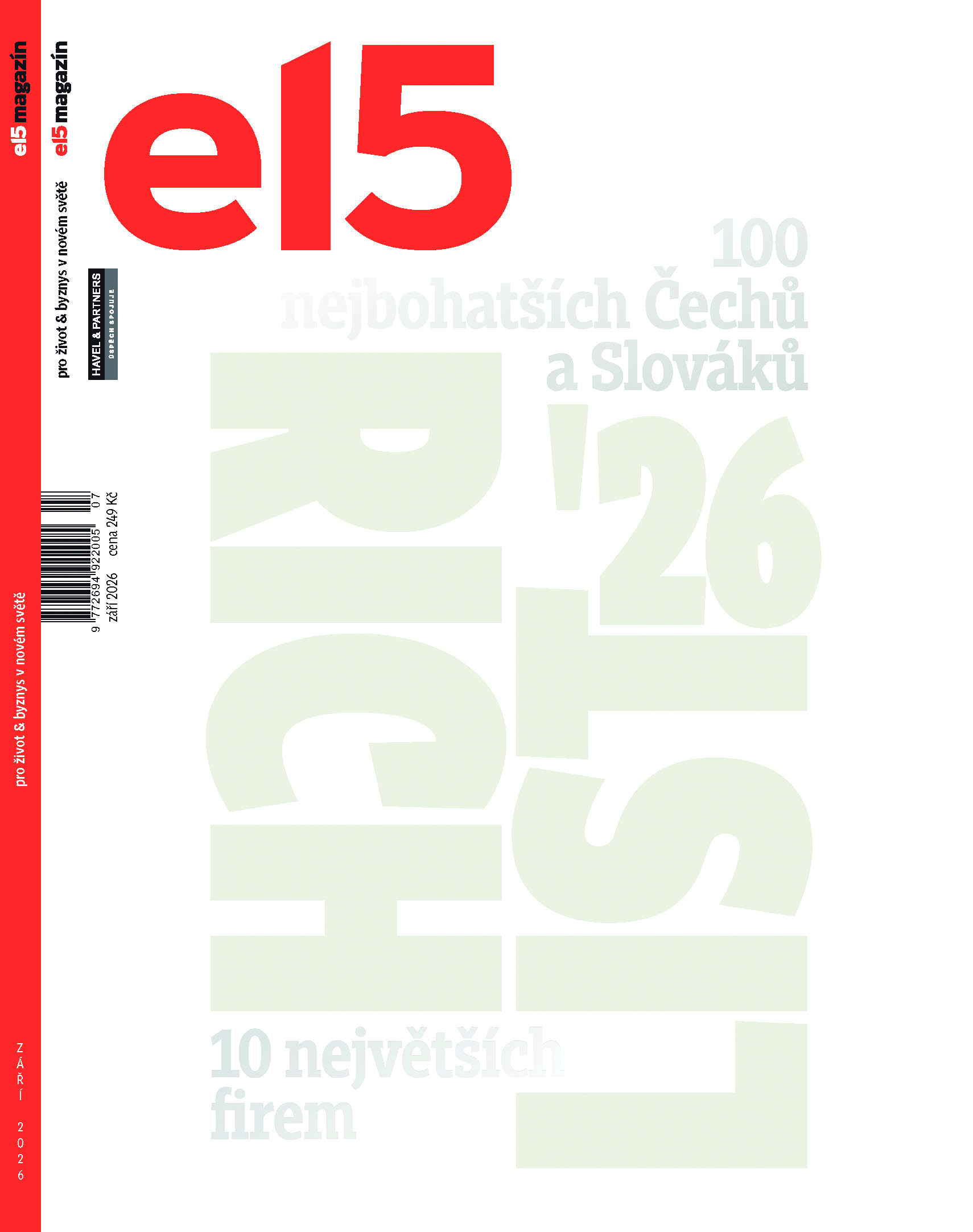
This interview was published in the E15 magazine publication Rich List ’26, whose release is supported annually by HAVEL & PARTNERS. The firm is not involved in compiling the list of the 100 wealthiest Czechs and Slovaks included in the publication, nor in estimating their wealth. However, by supporting this project, we would like to express our appreciation for Czech and Slovak entrepreneurs who, for more than 35 years, have been building and shaping a culture of free enterprise, and among whom are many of our clients.