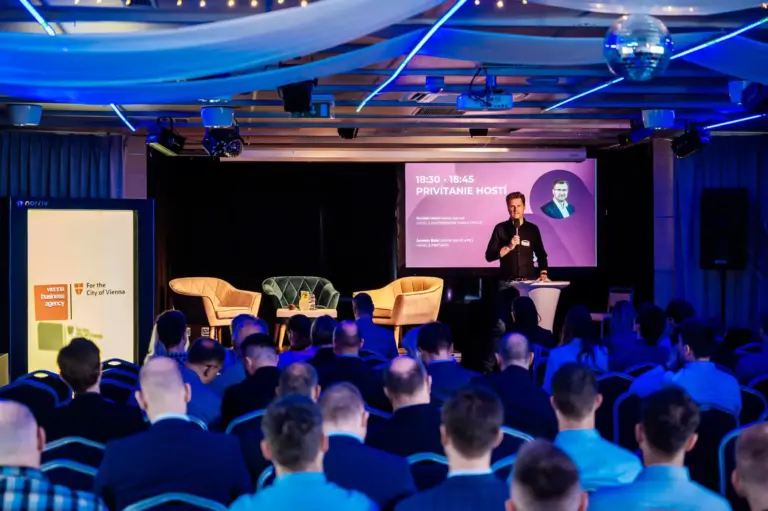
Successful startups today are not built on a good idea alone. What makes the difference is discipline, a high-quality team, the ability to work with data, and a well-thought-out growth strategy. These were among the key topics discussed at the fourth annual Startup & Investor Meetup, organized in Bratislava by HAVEL & PARTNERS and ONE FAMILY OFFICE.
The event brought together founders of ambitious companies, venture capital investors, bankers, legal experts, and representatives of technology companies, creating a unique forum for an open discussion on what drives company growth, profitability, and global success today.
Just a few years ago, the startup ecosystem was dominated by the race to secure investment as quickly as possible and pursue aggressive growth. Today, the situation is very different. Artificial intelligence is reshaping the way businesses operate, investors are becoming more selective, and companies must demonstrate much earlier that they are capable not only of growing, but also of generating profits. Investors are paying much closer attention to whether a company has solid fundamentals, a realistic business model, and the potential to create long-term value.
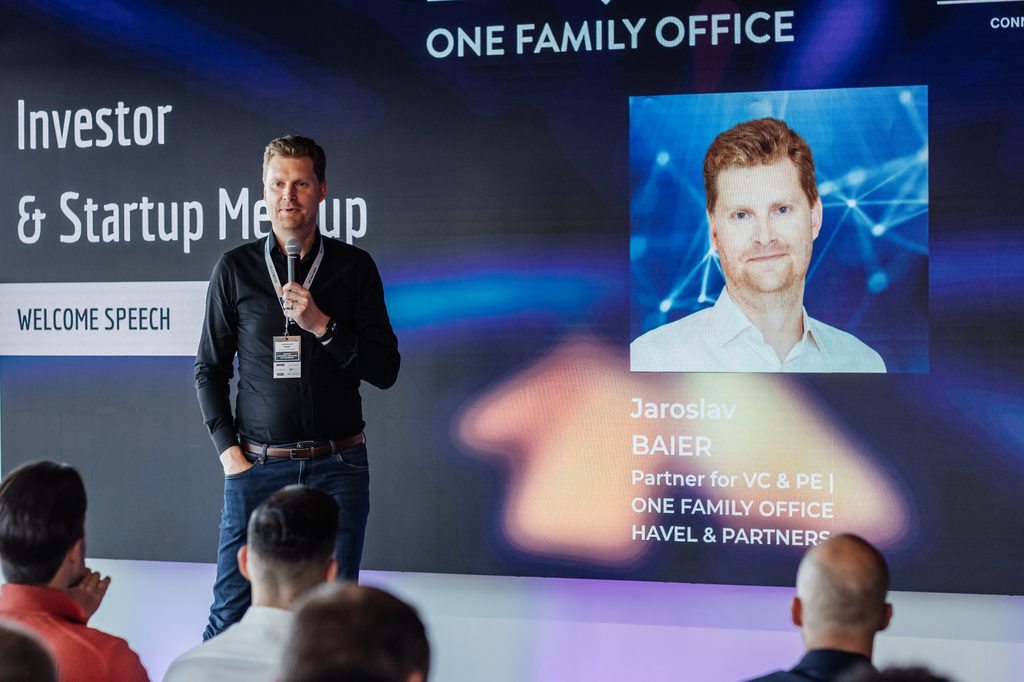
According to Jaroslav Baier, Partner at HAVEL & PARTNERS, Slovakia and the Czech Republic remain among the less visible venture capital markets, despite producing high-quality technology companies. “In Central Europe, we do a lot of great things quietly. That is precisely why we organize events like this: to talk more about success stories, ambitions, and the people behind them,” he said at the opening of the event.
HAVEL & PARTNERS is among the most active law firms in the venture capital sector across the CEE region, advising on dozens of investment transactions every year. According to Jaroslav Baier, connecting entrepreneurs, investors, and technology talent is one of the key prerequisites for enabling the region to produce more companies capable of achieving global success.
Connecting worlds
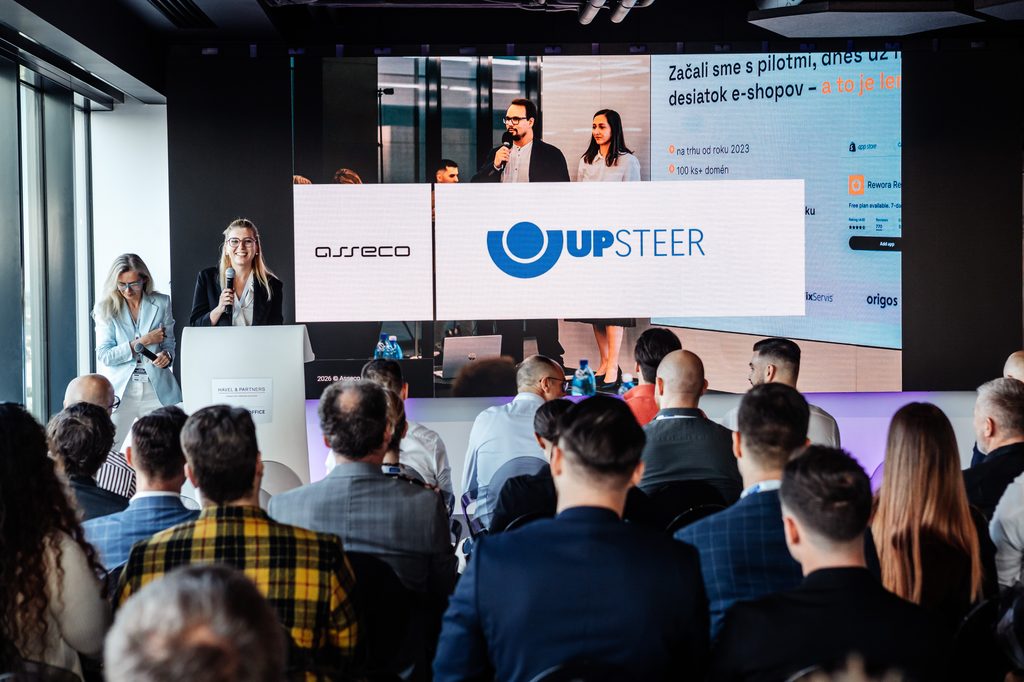
One of the event’s main partners was Asseco, which has long been supporting technology startups through its UpSteer incubator. According to Michaela Lovásová of Asseco, startups often claim that corporations slow down innovation, while large companies argue that startups do not understand business. “The truth lies somewhere in between. We believe that the future is created neither in garages nor in corporations alone. It is created where these two worlds come together,” she explained.
Zuzana Fratričová of Asseco added: “Many startups had a great idea and strong technology. What they lacked, however, was experience, contacts, or someone to guide them through the demanding period of building a company.” This was precisely the reason behind the creation of UpSteer, a technology incubator that offers startups not only mentoring, but also access to contacts, experience, and large corporate customers.
Jaroslav Havel, Managing Partner of HAVEL & PARTNERS and founder of ONE FAMILY OFFICE, shared the perspective of an investor who has been active in venture capital since 1999 and was involved in the emergence of the market in both the Czech Republic and Slovakia. Drawing on specific examples, he demonstrated that investing in technology companies requires far more than capital alone. What matters most are strong partners, access to the world’s leading venture capital funds, and a global network of contacts built over many years.
“A network of contacts is incredibly important in venture capital. Access to top-tier international funds cannot be secured through money alone. You need strong relationships and people who can introduce you, present you, and explain why you should be given the opportunity to invest,” said Jaroslav Havel.
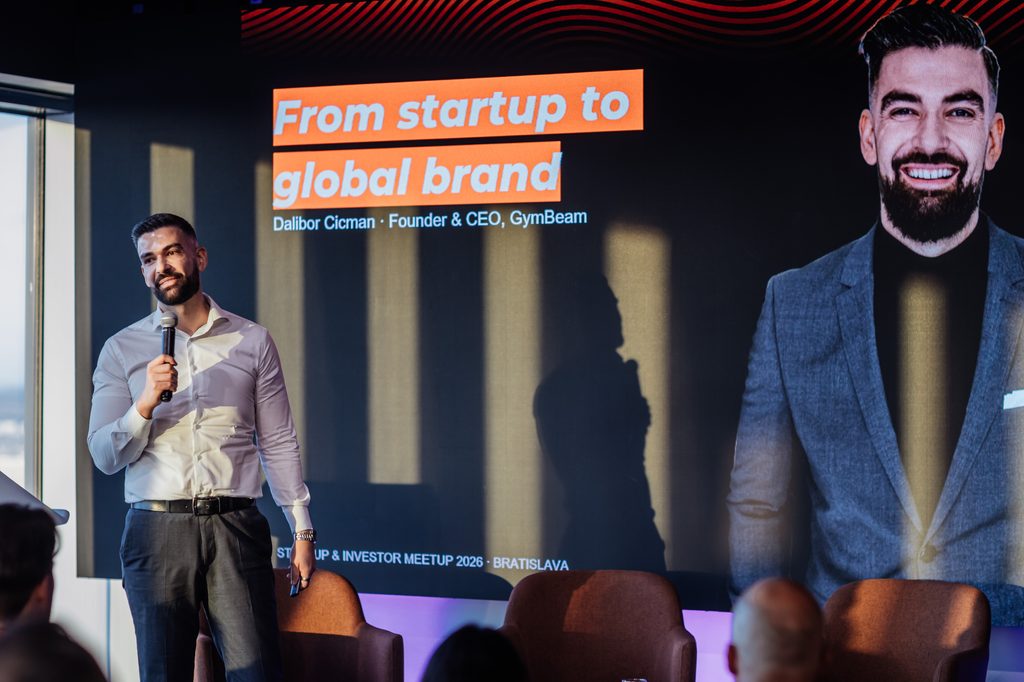
Dalibor Cicman, CEO of GymBeam, used his own story to illustrate that success does not happen overnight. GymBeam started out as a small e-shop and has since grown into one of the largest players in the sports nutrition market in Europe.
Cicman spoke openly about the company’s early funding rounds, its cooperation with investors Crowdberry, PortfoLion, and EBRD, as well as its geographical expansion. He considers long-term profitability to be one of the most important lessons he has learned. “There is one thing that always works, whether during a pandemic, a war, or in times of positive or negative market sentiment. It is long-term sustainable profit,” he said. “I have learned that a company should always be profitable. It gives us the freedom to decide on the next funding round at the time that is most appropriate,” he added. In his view, data management, customer satisfaction, and the ability to leverage new technologies are equally important.
AI become a standard part of business
In the founders’ panel discussion, Dalibor Cicman, Yassaman Omidbakhsh of Eyerim, and Michal Káčerík, founder of SaferPass, also spoke about how they use AI in their companies. Today, artificial intelligence helps optimize marketing, personalize the customer experience, automate internal processes, and accelerate product development.
At the same time, companies are gaining access to higher-quality data, enabling them to make better-informed business decisions. The panel participants agreed that while AI significantly increases efficiency, it is not, in itself, a guarantee of success. A high-quality product, a capable team, and a clear vision remain the decisive factors. In their view, it is precisely the combination of technology and experienced people that will determine which startups can grow from local ventures into international companies.
Another topic of the evening was venture debt, a form of financing that has been appearing with increasing frequency in Central Europe in recent years. Marek Sásik of Slovenská sporiteľňa explained that bank financing and venture capital should not be viewed as competing alternatives. On the contrary, they are complementary financing tools. Bank financing makes particular sense for companies that already have stable revenues, a proven business model, and predictable cash flow. Venture debt, in turn, can help startups finance further growth without founders having to significantly reduce their stake in the company.
FAQ
What determines a startup’s success?
Beyond a great idea, success depends on a strong team, data-driven decision-making, and a well-thought-out growth strategy. Investors are also increasingly focused on whether a company has solid foundations, a realistic business model, and the ability to create long-term value.
What do investors look for when investing in startups?
Investors are now more selective when choosing startups. Beyond growth potential, they are paying closer attention to business models, profitability, and the long-term sustainability of a company’s growth.
How can AI help startups and technology companies?
AI can support marketing, personalize customer experiences, automate processes, and accelerate product development. However, AI alone does not guarantee success – a strong product, a capable team, and a clear vision remain essential.
What helps startups expand internationally?
Beyond capital, experience, reliable partners, and a strong international network are key. The right connections can help companies and investors gain access to international partners and leading global investment funds.