
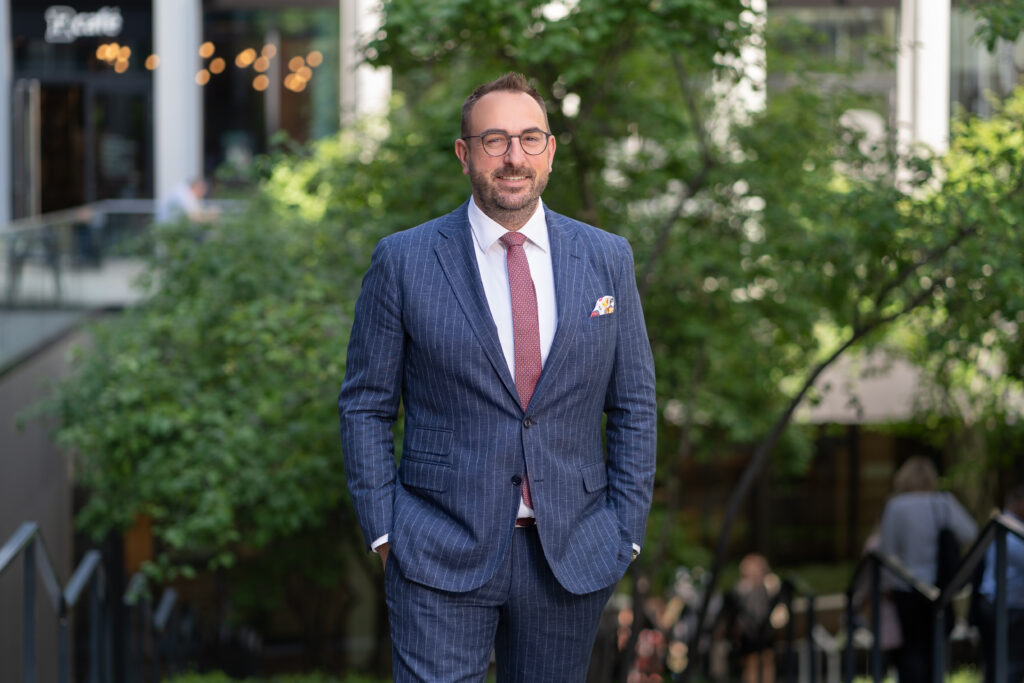
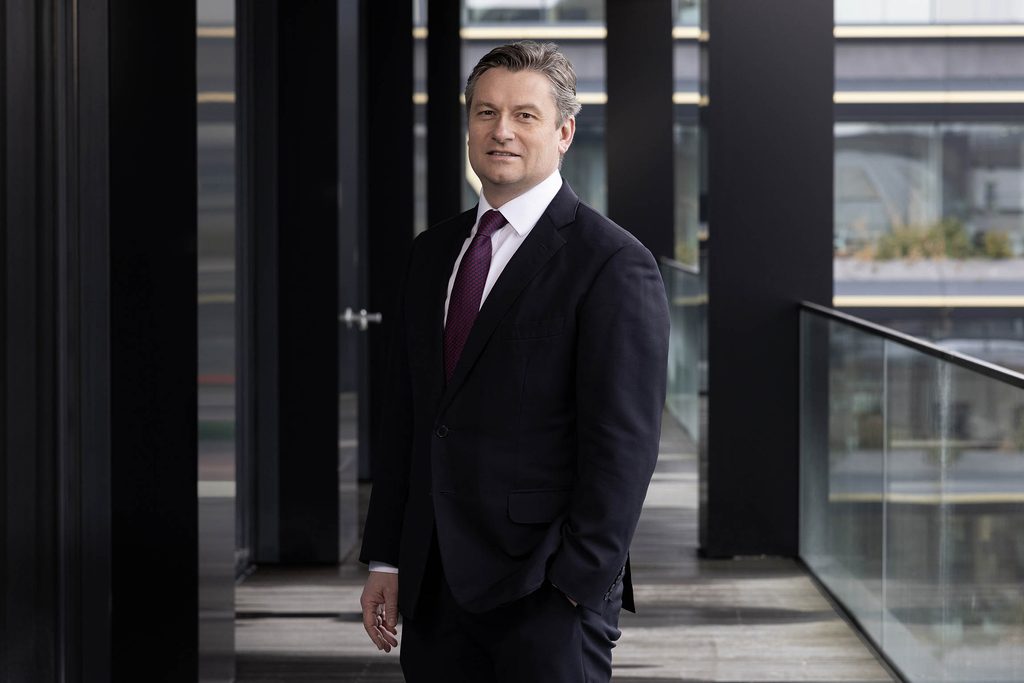
The days when buying an apartment and simply waiting for prices to rise was enough are gradually coming to an end. What determines the success of a real estate investment today? Why is a good address alone no longer sufficient, and which segments are likely to shape the future of the market? We asked Lukáš Syrový of HAVEL & PARTNERS and Pavel Scháňka of OneCap.
It is always wise to target structural imbalances between supply and demand, analyze capital availability, and assess overall market liquidity.
Czechs have long stood out for their strong preference for real estate investments, traditionally viewing property as a safe store of value. Does it still make sense to invest in so-called bricks and mortar today?
Real estate has long been, and will continue to be, an attractive investment opportunity. However, this is no longer true across the board; it’s necessary to selectively choose investments across sectors, geographies, and risk classes that have growth potential while also limiting risk. And when it comes to risks, diversification is becoming increasingly important today. With our new globally focused real estate fund, OneCap REIF, we intend to pursue investment strategies built on co-investments with reputable partners, and thus participate in higher returns. However, it is always necessary to carefully evaluate the choice of partner, location, financing method, and the duration of the entire process.
I agree that the days when almost every project quickly found a buyer are over. Today’s buyers are far more price-sensitive, compare individual projects more carefully, and give greater consideration to what they are actually willing to pay for. We see this clearly in transactions themselves. Investors today spend much more time vetting projects and are significantly more disciplined than they were when the market was driven primarily by rapid price growth, low interest rates, and cheap money. Today, therefore, the deciding factors are details that aren’t immediately apparent but can fundamentally influence a property’s value and its long-term profitability.
So, how can you identify a truly attractive real estate investment?
The key lies in structural inefficiencies on the supply and demand sides, as well as the resulting liquidity. Location is always absolutely crucial, as are the quality of the project and its layout design. I would look at the developer’s experience and financial strength, the choice of architect, and the building’s overall technical and energy-efficient solution. The project’s economics are also closely linked to well-thought-out floor plans, the right mix of apartment sizes, their pricing, and the scope of the developer-provided fit-out standard. Of course, it is also necessary to factor in rising construction costs and to take into account the pressure from increasing interest rates and land prices. You can also recognize a good project by its approach to customers, the way it handles defects and complaints, and its willingness to accommodate client-requested alterations.
International real estate markets show that investors are now looking for opportunities far beyond traditional offices, shopping centres, or residential projects. Segments built on long-term societal trends are gaining importance, ranging from healthcare facilities and life sciences to student housing, senior living, and data centres. At the same time, there is a growing emphasis on the development of multifunctional urban districts that combine housing, workplaces, services, and public spaces. This is precisely the approach that is gradually beginning to gain ground in the Czech Republic as well.
What interesting trends in real estate portfolio composition should investors be paying attention to?
International real estate markets show that investors are now looking for opportunities far beyond traditional offices, shopping centres, or residential projects. Segments built on long-term societal trends are gaining importance, ranging from healthcare facilities and life sciences to student housing, senior living, and data centres. At the same time, there is a growing emphasis on the development of multifunctional urban districts that combine housing, workplaces, services, and public spaces. This is precisely the approach that is gradually beginning to gain ground in the Czech Republic as well.
That is also why we are looking at development projects that offer long-term investment value in the field of quality residential housing. At the same time, we want to strengthen our presence in projects that contribute to quality of life and address long-term societal needs, such as senior care. It is both a major social issue and a significant investment topic. Europe’s population is ageing, the number of older people is growing rapidly, and high-quality senior care will be one of the greatest challenges facing society in the years ahead. Meeting that challenge will require capital, high-quality operators, technology, smart real estate solutions, and new service standards. That is precisely why we want to focus on this area within OneCap.
Where do you see the biggest shortcomings of the Czech real estate market?
In recent years, the Czech commercial real estate market has become almost entirely domestically driven, despite operating in a fully open international market environment. It is common for local investment groups to be strongest in their home market, but such a strong dominance of local capital is not something you would normally see.
I also do not often see high-quality, professional asset management that truly reflects investors’ needs and genuinely focuses on maximizing value in line with the business plan. That business plan itself has had to change several times in recent years due to geopolitical and other factors, such as covid or the war in Ukraine. These changes have included shifts in the approach of financing banks, increases in construction work prices, changes in project liquidity, and evolving ESG requirements.
You mentioned the need for geographical diversification as well. Are Czechs also interested in real estate abroad?
Even some wealthier families still do not diversify their portfolios sufficiently across geographies and sectors, and properly assessing risk often remains a challenge for them. This is also reflected in the investment opportunities available in the market. Some investors limit their investments to Central Europe at most, but that does not satisfy the requirement for diversification. That model is gradually changing, however, and some Czech investors are genuinely beginning to think globally. In many cases, the traditional approach still persists, where a family gradually acquires individual apartments or other investments, sometimes across several jurisdictions, and then one family member is left to manage those investments, often with considerable effort. Sometimes a family invests on a club basis and has to keep track of available capital and liquidity over time. More often, however, they entrust their assets to a family office. It then invests in international fund structures, with liquidity and portfolio management being handled by the family office. This allows them to gain access to investment products that are not commonly available on the market, or may not be available at all.

What should investors keep in mind when buying real estate abroad?
First and foremost, it is essential to have a good understanding of the local environment. Each country has different rules for acquiring real estate, a different system for recording ownership rights, and different tax obligations. That is why it is crucial to work with a high-quality local legal adviser who can conduct due diligence on the investment, help structure the transaction, and provide ongoing support with matters related to ownership of the property in the future. Thanks to our international network of cooperating lawyers around the world, this is something we are able to provide.
It is also important to think about the day-to-day operation of the investment, namely who will manage it. You need a reliable property manager who is able to deal locally with routine issues, repairs, vacancies, or disputes with tenants. Currency and liquidity risks are often underestimated. Entering a foreign market is usually easy, but selling a property may prove more difficult depending on market conditions and liquidity.
And not every destination that is attractive today will remain equally attractive twenty years from now. The value of a property may be affected by a country’s political stability, the development of the local economy, migration trends, or squatters. Natural risks must also be taken into account, such as more frequent wildfires, floods, or water shortages.
Where do you currently see attractive investment opportunities?
Generally speaking, it is always worth focusing on structural imbalances between supply and demand, analyzing the availability of capital, and the overall liquidity of the market. It is also important to assess the potential for rental growth and price appreciation, as well as the overall economic strength and stability. From an investment perspective, we analyse locations not only at country level, but also down to the level of individual cities and provinces; this is absolutely essential. At the country level, we primarily assess tax, macroeconomic, financial, and geopolitical risks. Together with Czechoslovak Capital Partners, we have completed two financial investments abroad with a reputable partner in the development of 350 family homes in Calgary, Canada.
Key contacts
Lukáš Syrový
Partner
Lukáš specialises in real estate law and construction law. He has extensive experience providing comprehensive legal advice to both Czech and international investors in connection with real estate acquisitions and divestitures, the development of commercial real estate projects, brownfield redevelopment projects, as well as the lease and management of retail, residential, office, industrial, and logistics properties.
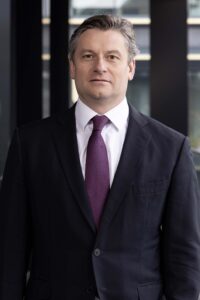
Pavel Scháňka
Managing Partner OneCap Real Estate & Infrastructure
Pavel is a real estate investment and asset management professional serving as Managing Partner for Real Estate & Infrastructure at OneCap, where he oversees the newly established OneCap REIF real estate fund. At the same time, he acts as a real estate adviser to ONE FAMILY OFFICE.