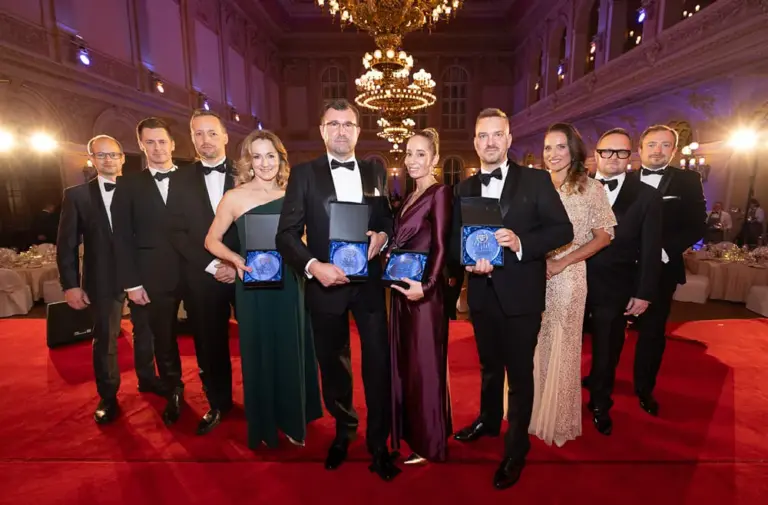

Do mergers and acquisitions serve as a means for Czech and Slovak companies to expand into international markets? Is entering foreign markets complicated for these firms? What is the Family Management Buy-Out model and why is it becoming increasing popular? In an interview, Jan Koval, a partner at HAVEL & PARTNERS, and Václav Strýhal, the managing partner at NEXIA One Corporate Finance, provide their answers.
67% of Czech companies wish to expand abroad but 9 out of 10 consider the expansion complicated. We carry out dozens of transactions a year, 70% of which have an international element.
What role do M&A play today in the growth strategies of companies in the Czech Republic and Slovakia?
Recently, we have observed a growing trend where local companies have reached a significant size and financial stability that allows them to expand into more developed markets. M&A thus play a crucial role in the growth strategies of companies today. Thanks to this, companies from the Czech Republic and Slovakia are gaining new markets, securing production capacities or acquiring technological solutions that strengthen their competitiveness. These strategic acquisitions often occur in countries like Germany, France, Spain or Italy.
However, we still feel that some entrepreneurs consider entering foreign markets complicated. According to a survey conducted by Instant Research for Amazon, 67% of Czech companies wish to expand abroad, but 9 out of 10 see it as a complex process. We carry out dozens of transactions a year, 70% of which have an international element. So in our experience, there is nothing to worry about. Expanding abroad helps many companies develop their business and gain access to new customers, thereby strengthening their market position.

Do acquisition strategies differ from company to company?
We typically witness two main strategies. Some companies have already identified a specific acquisition partner in advance. Others cooperate with consulting companies like us – HAVEL & PARTNERS or NEXIA ONE CORPORATE FINANCE. Thanks to our international contacts and our cooperation with Nexia, a member of the NEXIA International global network, we can help companies identify suitable partners abroad. The success of a transaction does not only depend on the right selection of the target but also on understanding the legal conditions of the target country.
What challenges do companies face in international transactions?
The biggest challenge is often understanding the legal and tax environment of the target country. Cultural differences and industry-specific requirements also play an important role. An essential initial step is always the due diligence of the target company. We help clients identify risks and reflect them in the transaction – for example, through price adjustments or contractual guarantees.
Such analysis includes assessing financial stability, legal risks, and tax aspects. Our goal is to deliver a comprehensive executive summary to clients that includes key findings, risk levels and proposed solutions. The results of this due diligence may therefore affect the price of the transaction, its structure or contractual guarantees.
Does the valuation of companies in Western markets as opposed to local ones differ in any way?
The differences are significant. In Western markets, companies achieve higher valuations, often expressed as higher multiples of EBITDA. This is due to both the quality of these companies and their growth potential. However, it is important to note that the higher costs of foreign acquisitions are usually outweighed by the strategic benefits – for example, a stable customer base or access to new technologies. The key is to secure suitable financing and carefully calculate the return on investment.
Apart from expansion abroad, do other factors play a role in acquisitions?
Other factors include the consolidation of some sectors, both on the side of entrepreneurs and financial investors, who see the potential for effective integration in sectors with a large number of smaller players. Consolidation is thus a response to the fragmentation of certain sectors, especially in Central Europe. Companies, for example, in the construction industry, industrial manufacturing or IT sectors, face pressures for efficiency and increasing competition. Through consolidation, they achieve a greater market share, reduce costs, and improve operational efficiency. This trend is important for medium-sized enterprises, which can increase their market value.
A number of industries have already undergone some level of consolidation. For example, in manufacturing and technology companies, there is a demand for vertically integrated firms that provide not only manufacturing services but also development and innovation. However, fragmented sectors such as the construction industry still offer interesting opportunities for investors who can form stronger and more efficient players in these fields.
In recent years, the trend of handing over companies to the next generation has also been gaining momentum. Is this also reflected in sales of corporations?
Indeed. Handing over family businesses requires careful preparation. From a legal perspective, it is crucial to set up the right contractual documentation to regulate the transfer of shares, ensure continuity of management and protect the value of the company. As lawyers, we should never overlook the personal relationships within the family, because they are also crucial and play a major role in the final arrangement. It is important to address the issue of property settlement between family members to avoid future disputes.
For many family businesses, the priority is to keep the business under leadership of trustworthy people who share and understand the company culture. This is why the Family Management Buy-Out (FMBO) model is becoming increasingly popular, with the original owner handing over management to selected family members or key employees. It is particularly popular among smaller and medium-sized businesses where the family or original owners want the business to remain family-owned, while at the same time they would like to ensure its stability and growth under trustworthy leadership. FMBO is therefore popular in succession processes because it minimises the risk associated with external acquisition. Current employees and managers have long-standing knowledge of the company, its corporate culture, and have also built relationships with clients and suppliers. Needless to say, the financial aspects of the transaction also play a key role.
Could you outline what the typical funding structure looks like in these cases? Is it usually influenced by a number of individual factors in particular companies?
An FMBO’s financing structure may include a combination of bank financing, equity and external investors, allowing the firm to transition to its new management while stabilising its capital structure. With growing interest in this model, FMBO is expected to play a significant role in the M&A sector in the coming years. When preparing acquisition financing for clients, we provide comprehensive documentation and financial models to help secure approval from banking institutions abroad. Our experience with both local and foreign banks allows us to effectively support clients in a transaction set-up.
Key contacts:
Václav Strýhal
Managing Partner, NEXIA One Corporate Finance CZ
Václav is the founder of Nexia One Corporate Finance CZ. He specialises in corporate finance and advisory services related to project and investment finance, real estate financing and acquisitions. He has more than 21 years of experience in these areas. He spent 11 years in senior management positions at international banks, including Creditanstalt, Bank Austria Creditanstalt and HVB Bank.